
Table of Contents
- Home Inspection Checklist for Buyers: The Systems That Matter Most
- Structure, Foundation, and Drainage
- Roof, Attic, and Insulation
- Electrical, Plumbing, and HVAC
- Interior, Exterior, Doors, and Windows
- What to Expect During a Home Inspection
- How Long Does a Home Inspection Take?
- Infrared Thermal Imaging Home Inspection Benefits
- Questions to Ask a Home Inspector Before You Hire One
- After the Report: Negotiation and Next Steps
- Frequently Asked Questions
Last Updated: September 10, 2026
Home Inspection Checklist for Buyers: The Systems That Matter Most
A home inspection is a limited, non-invasive visual examination of a property’s accessible systems and components, performed to identify material defects, safety hazards, and deferred maintenance before you close. At Zenith Property Inspections, our certified inspectors walk buyers through every major system so nothing gets missed. This home inspection checklist for buyers covers what actually matters, what to expect during a home inspection, how long it takes, and how to negotiate after the report lands.
Most buyers scan the report for red flags and miss the bigger picture.
The real value isn’t in finding problems. It’s in understanding which problems are cosmetic and which ones signal structural integrity issues that will cost you for years.
Below, we break down the systems that decide whether a property is worth your money, plus the questions and negotiation moves that protect it.
Structure, Foundation, and Drainage
Foundation cracks are the single most misunderstood finding in any home inspection report. Hairline cracks in a garage slab are normal settling. Stair-step cracks in a brick foundation, or cracks wider than a quarter inch, point to movement that needs a structural engineer.
Your inspector checks the foundation, crawl space, grading, and drainage systems for water intrusion, which is the root cause of most long-term damage. Poor slope and grading push water toward the house instead of away from it. In Northern California, where expansive clay soils shift with seasonal moisture, that matters more than most buyers realize.
Never accept “it’s just settling” as a final answer on a foundation crack. Ask the inspector to document the crack width, location, and whether it’s active. An active crack that widens over one rainy season is a negotiation point worth thousands.
Roof, Attic, and Insulation
Roof shingles, flashing, and attic ventilation tell you how much life is left in the most expensive exterior system on the property. An inspector checks shingle condition, granule loss, flashing at valleys and chimneys, and whether the attic ventilates properly.
Poor attic ventilation traps moisture, which feeds mold growth and shortens roof life. Insulation depth and coverage get checked at the same time. Inadequate insulation shows up later as high energy bills and an overworked HVAC furnace.
- Missing or compressed insulation in the attic floor
- Rusted nails or dark staining on roof decking, a sign of chronic moisture
- Bathroom and kitchen exhaust fans venting into the attic instead of outside
Electrical, Plumbing, and HVAC
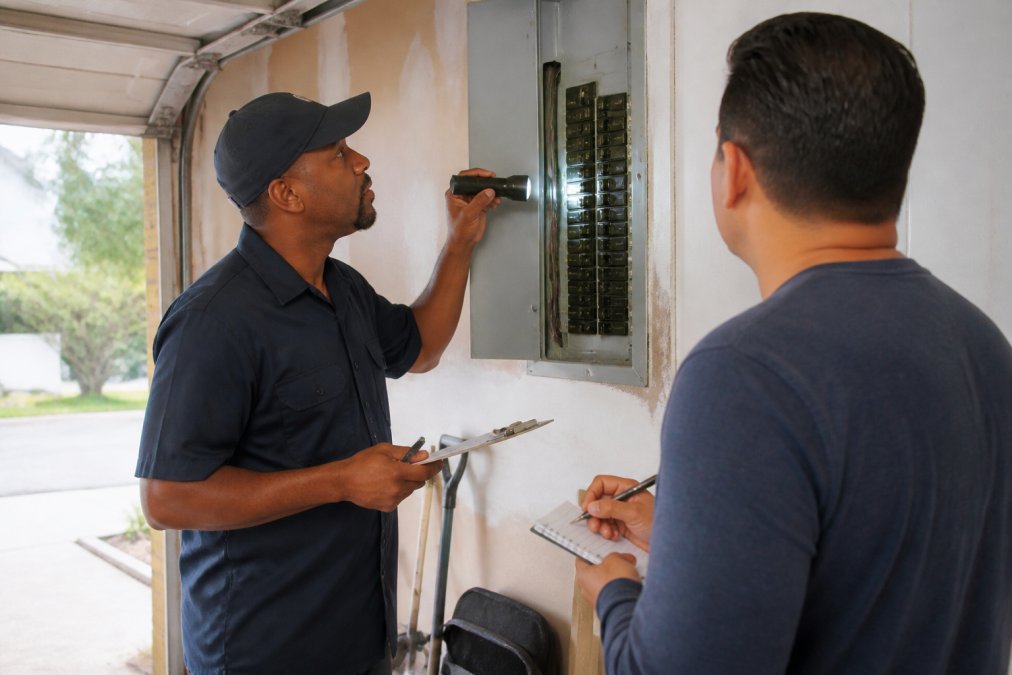
An electrical panel that’s undersized, double-tapped, or fitted with the wrong breakers is a safety hazard, not a bargaining chip. Inspectors check the panel, wiring type, GFCI outlets in kitchens and baths, and whether smoke detectors and carbon monoxide alarms are present and functioning.
Plumbing gets the same scrutiny: water pressure at multiple fixtures, visible plumbing leaks, water heater age and condition, and drain performance. Low water pressure upstairs often traces back to a supply line issue, not a fixture problem.
HVAC efficiency depends on equipment age, service history, and duct condition. An inspector will run the system, check the furnace and AC, and note anything that suggests deferred maintenance.
| System | What Gets Checked | Common Red Flag |
|---|---|---|
| Electrical | Panel, wiring, GFCI outlets, alarms | Double-tapped breakers, aluminum wiring |
| Plumbing | Pressure, leaks, water heater, drains | Low pressure, corroded supply lines |
| HVAC | Furnace, AC, ducts, thermostat | Aging equipment, leaking ducts |
| Roof/Attic | Shingles, flashing, ventilation, insulation | Active leaks, poor ventilation |
Interior, Exterior, Doors, and Windows
Interior and exterior findings rarely make headlines, but they are where inspectors separate cosmetic wear from active water management failures. A stained ceiling is a fact; whether that stain is a dried one-time event or an active leak determines whether it belongs in your repair request.
Interior rooms. Inspectors check walls and ceilings for staining, bubbling paint, and soft drywall, all moisture signatures. They note floor levelness and slope, since a floor that drops toward an exterior wall often traces back to foundation movement or a failing joist. They also check for cracks at interior corners, which can indicate differential settlement rather than simple drywall shrinkage.
Exterior walls and drainage. Siding, trim, and masonry get checked for rot, cracking, and separation. The critical measurement is clearance: wood siding and trim should sit at least 6 inches above grade, and the soil should slope away from the foundation at roughly a 6-inch drop over the first 10 feet. When that slope is flat or reversed, water pools at the foundation and finds every crack. That single grading issue causes more long-term damage than most buyers realize.
Doors and windows. Inspectors test function, not just appearance. Watch for:
- Windows that stick, won’t latch, or show fogging between panes (a failed seal that kills efficiency and traps moisture)
- Doors that rub the frame or won’t latch square, often a symptom of foundation movement, not a hardware problem
- Rot at the bottom of exterior door frames and thresholds, where water sits
- Missing or deteriorated weatherstripping and caulking at penetrations
Individually, these are minor. A house full of them signals deferred maintenance, and the pattern matters more than any single item.
Walk the exterior after a rain if you can. Water staining, soft spots, and grading problems are far easier to spot when the ground is wet and the evidence is fresh.
What you can safely check yourself vs. what needs a professional. This is the line most buyers never get told. You can safely note staining, test window and door function, look for rot with your eyes, and check that downspouts discharge away from the foundation. You should not open an electrical panel, walk a roof, enter a crawl space, or probe structural members, those carry real safety and liability risk and belong to a licensed inspector or specialist. Knowing the boundary keeps you useful without putting you in danger.
What to Expect During a Home Inspection
Expect a thorough visual inspection of all accessible systems, typically with you present, lasting two to four hours depending on property size. The inspector examines structure, roof, attic, electrical, plumbing, HVAC, interior, exterior, and drainage, then documents findings with photos in a written home inspection report.
Bring your own questions. A good inspector walks you through what they find in plain language rather than handing you a document full of codes. At Zenith Property Inspections, we use DJI drone technology and infrared thermal imaging to reach what a standard visual inspection can’t see, and we deliver same-day reports so you’re never waiting on findings.
Follow the inspector during the walkthrough and ask “what would you fix first if this were your house?” That single question surfaces the priority list faster than reading the whole report.
How Long Does a Home Inspection Take?
A home inspection typically takes two to four hours for a single-family home, longer for multi-unit or luxury properties. The on-site time depends on square footage, age, and how many systems need closer evaluation. The written report usually follows within 24 hours, though some inspectors deliver same-day.
Budget the full window. Rushing the inspector to finish faster means missed findings you’ll pay for later.
Infrared Thermal Imaging Home Inspection Benefits
Infrared thermal imaging detects temperature differences behind walls that the naked eye can’t see. Inspectors use it to find hidden moisture intrusion, missing insulation, overheating electrical components, and air leaks around window seals.
The benefits show up most in older homes and properties with limited visibility, like finished basements or crawl spaces. Thermal imaging won’t diagnose mold on its own, but it flags the moisture conditions where mold growth starts, which lets you bring in a certified mold inspector before closing rather than after.
- Hidden water intrusion behind drywall
- Missing or settled insulation
- Overheating breakers and connections
- Air leaks around doors and windows
Questions to Ask a Home Inspector Before You Hire One
Ask about credentials, standards of practice, report turnaround, and what the inspection does not cover. A qualified inspector will tell you their certifications, which standards of practice they follow, and where the limits of a visual inspection begin.
Use this checklist before you book:
- What certifications do you hold, and which standards of practice do you follow?
- Are you licensed or certified for mold, pool, or specialty systems, or will I need a separate inspector?
- How soon after the inspection will I receive the report?
- Do you offer weekend appointments, and is there an extra fee?
- Can you inspect multi-family or rental properties?
- Will you walk me through the findings in person?
A National Housing Code Certified Master Inspector, for example, brings code-level knowledge to the walkthrough that a generalist may not. Zenith Property Inspections holds that certification along with InterNACHI, ASHI, and CREIA standards of practice, and offers Saturday and Sunday appointments at no extra charge.
After the Report: Negotiation and Next Steps
The report is a negotiation document, not a verdict. Most guides stop at the inspection itself; the real value is in what you do with the findings. Here is a framework for turning a 50-page report into a short, credible repair request, and knowing when to walk.
Step 1: Sort findings into three buckets.
- Must-fix safety items, electrical hazards, gas leaks, active water intrusion, missing smoke or carbon monoxide alarms, blocked flues. These are non-negotiable and often affect your ability to insure or finance the home.
- Negotiate-with-credit systems, aging roof, HVAC near end of life, water heater past its service window. You will replace these anyway, so ask for a credit rather than a repair the seller will do cheaply.
- Monitor-later maintenance, cosmetic cracks, worn caulk, minor grading issues. Note them, budget for them, but do not burn negotiating capital on them.
Step 2: Decide repair vs. credit. A repair makes sense when the fix is small, well-defined, and you want it done before closing (a leaking supply line, a faulty GFCI). A credit makes sense for big-ticket items where you want control over the contractor and materials. Sellers rarely agree to fix everything, so prioritize findings that affect your financing, insurance, or safety.
Step 3: Know your walk-away points. Some findings justify ending the deal: active structural movement confirmed by a structural engineer, a foundation repair estimate that exceeds your contingency, or a seller who refuses to address clear safety hazards. Set these thresholds before you start negotiating, while you are still calm and objective.
Step 4: Handle smart home and IoT systems. Connected thermostats, security systems, smart panels, and solar arrays often fall outside a standard visual inspection. Ask the inspector to verify they are functional and properly wired, and confirm in writing which devices convey with the sale, a detail that trips up buyers more often than it should.
Group findings into three buckets, must-fix safety items, negotiate-with-credit systems, and monitor-later maintenance. That structure turns an overwhelming report into a short, credible repair request the seller can actually respond to.
Regional and climate-specific considerations. What you prioritize depends on where the home sits. In a desert climate, foundation movement from soil expansion and contraction and HVAC strain from extreme heat move to the top of the list. In a coastal climate, moisture intrusion, mold risk, and salt-related corrosion on exterior hardware and roofing fasteners dominate. In a cold climate, ice damming, attic ventilation, and freeze risk on plumbing supply lines matter most. Ask your inspector which findings are climate-driven, because those tend to recur.
For financing-backed purchases, review the HUD homebuyer resources and your lender’s appraisal requirements, since some findings affect loan approval. The InterNACHI Standards of Practice define what a thorough inspection should include, and the EPA’s indoor air quality guidance is a useful reference if the report flags moisture or radon testing.
Frequently Asked Questions
What is the biggest red flag in a home inspection?
Structural problems top the list: foundation cracks that suggest movement, water intrusion in the crawl space or attic, and roof damage that has led to mold growth. Electrical hazards like an outdated electrical panel or missing GFCI outlets also raise serious safety concerns. These issues affect structural integrity and can cost far more to fix than cosmetic problems, so they deserve a closer look from a licensed specialist before you finalize your purchase.
Should a buyer be present during a home inspection?
Attending gives you a conversational walkthrough of the property condition, and you can ask the inspector about anything that looks off. You will see how the furnace, water heater, and electrical panel actually work and hear which findings are safety hazards versus deferred maintenance. If you cannot attend, ask for a same-day report and a phone walkthrough so nothing gets lost in a PDF.
How long does a home inspection take on a typical house?
Most single-family homes take two to three hours, though larger properties, multi-unit buildings, or homes with pools and older plumbing can run longer. The scope of the visual inspection, the age of the home, and how many questions you ask all affect timing. Ask your inspector for an estimate when you book so you can plan your day.
How do I interpret a home inspection report?
Read it in categories, not front to back. Start with safety hazards and major systems, then move to repair request candidates, then deferred maintenance you can live with. A good report separates these clearly and explains what each finding means in plain language. If anything is unclear, call your inspector before your contingency deadline and ask them to walk you through it.