
Table of Contents
- What Master Certified Home Inspector Benefits Mean for Your Career
- Master Certified vs. Standard Certification
- Professional Credibility and Client Trust
- Job Security and Market Demand
- Career Flexibility and Work-Life Balance
- Continuing Education and License Renewal Requirements
- The Benefits of Infrared Thermal Imaging in Home Inspections
- Frequently Asked Questions
Last Updated: September 11, 2026
What Master Certified Home Inspector Benefits Mean for Your Career
Earning a master certified home inspector credential changes how the market treats you, what you can charge, and which properties you can inspect. This guide from Zenith Property Inspections breaks down the real advantages of that designation, from income potential to liability protection. A master certified home inspector is a credentialed professional who has completed advanced training, verified field experience, and continuing education beyond the standard licensing threshold. That distinction matters more than most inspectors realize when they first enter the trade.
Below, we’ll show you exactly how the master level separates inspectors in income, credibility, and long-term career options. But first, here’s what most guides get wrong: they treat certification as a one-time checkbox rather than a career-long investment with compounding returns.
Master Certified vs. Standard Certification
Standard certification proves you can perform an inspection. Master certification proves you’ve mastered the discipline, including code interpretation, advanced diagnostics, and specialized systems. The gap between the two shows up in three places: the depth of your technical training, the scope of properties you can handle, and the trust clients extend before you’ve said a word.
A standard-licensed inspector typically completes entry-level coursework, passes a state or association exam, and fulfills the minimum inspection count. A master-level credential usually requires additional verified inspections, advanced coursework in building codes and systems, and a clean professional record.
Professional Credibility and Client Trust
Client trust is where master certification pays off fastest. When a buyer sees a National Housing Code Certified Master Inspector credential, the conversation shifts from “are you qualified?” to “when can you start?” That’s a meaningful difference in a transaction where buyers are already anxious about what they’re purchasing.
Credibility also matters to real estate agents. Agents refer inspectors they trust to protect their own reputation. A master-level credential, backed by association memberships and specialty certifications, gives agents a reason to keep your name at the top of their list.
If you’re trying to figure out how to choose a qualified home inspector as a buyer, look for exactly these signals: advanced certification, association membership, specialty credentials, and a documented inspection methodology.
Job Security and Market Demand
Market demand for skilled inspectors stays steady because every real estate transaction needs one. Master-certified inspectors face less competition at the top of the market, where buyers of higher-value properties expect advanced diagnostics and specialized services. roof certification inspection.
Job security in this field comes from three things: your credentials, your service range, and your reputation. A master designation strengthens all three. It also opens doors to commercial inspections, multi-family buildings, and specialty assessments that standard inspectors often can’t perform.
Career Flexibility and Work-Life Balance
Most guides stop at ‘you can be pickier about jobs.’ That is true, but it undersells what the Master designation actually unlocks: a career path with multiple exits, not just a better version of the same job. This is the part of the conversation the competition largely skips, and it is where the credential pays off over a decade rather than a season.
The solo-operator ceiling. A Master-certified inspector working alone can command premium fees and choose which jobs to accept, but there is a hard limit: your income is capped by the number of inspections you can personally perform. Flexibility at this stage means schedule control, declining low-margin work, blocking weekends, and concentrating on the property types and clients you actually want. That is real, but it is the floor of the opportunity, not the ceiling.
Scaling into a multi-inspector firm. The next step for some is hiring and training sub-inspectors. A Master credential can provide the authority to train and review work performed by less-credentialed inspectors. This can allow for a shift in business model.
Moving into commercial and specialized inspections. Commercial property inspections, multi-family portfolios, and specialty disciplines like structural and environmental assessments can carry higher fees and longer engagement cycles than single-family residential work. These often demand advanced code knowledge and documented experience that a Master credential can verify.
Adjacent roles the credential opens. A Master designation can also be a qualifying signal for non-inspection work, such as training and mentoring new inspectors, expert witness support, and consulting.
What flexibility actually looks like at each stage. Early on, flexibility means choosing your jobs. Mid-career, it means choosing your business model. Later, it means choosing whether you are in the field at all. The Master credential can be a common thread that makes transitions possible, as these paths often require a verifiable standard of expertise.
Continuing Education and License Renewal Requirements
Continuing education keeps your credential valid and your knowledge current. Most states require a set number of continuing education hours per renewal cycle, and master-level certifications typically require more than the state minimum (nachi.org).
Regulatory compliance and license renewal aren’t just paperwork. They’re how you stay legally protected and professionally sharp. Building codes change, inspection standards evolve, and clients expect you to know the latest requirements.
|
Requirement |
Standard Certification |
Master Certification |
|---|---|---|
|
Initial training |
Entry-level coursework |
Advanced coursework plus field hours |
|
Verified inspections |
State minimum |
Higher threshold |
|
Continuing education |
State-required hours |
State hours plus advanced topics |
|
Specialty credentials |
Optional |
Common expectation |
|
Renewal cycle |
Standard |
Standard plus credential maintenance |
The Benefits of Infrared Thermal Imaging in Home Inspections
Infrared thermal imaging reveals problems the naked eye cannot see. Moisture intrusion, missing insulation, overheated electrical components, and air leaks all show up as temperature differences on a thermal camera (nachi.org). For buyers, this means fewer surprises after closing. For inspectors, it means a genuine differentiator.
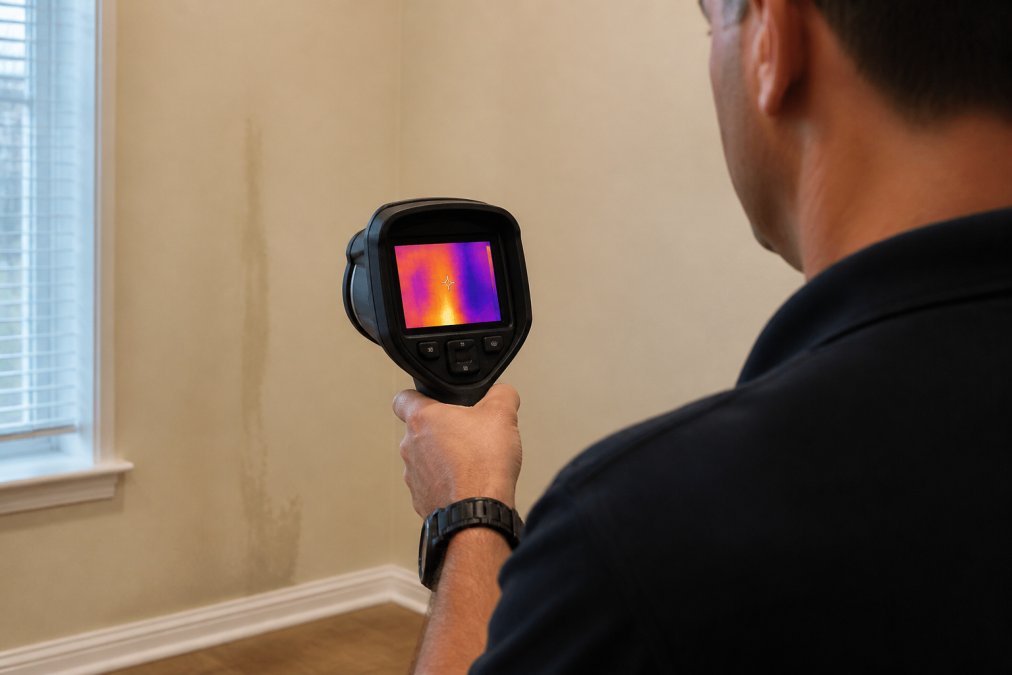
The benefits of infrared thermal imaging in home inspections extend beyond detection. Thermal scans document findings visually, giving clients evidence they can bring to a negotiation or a contractor. That documentation supports risk management and strengthens your report’s credibility.
Drone technology adds another layer. Roof assessments that once required ladders or climbing now happen safely from the air, capturing high-resolution images of areas that are difficult or dangerous to reach (faa.gov). The importance of drone technology in property evaluations keeps growing as more inspectors adopt it to inspect steep roofs, chimneys, and multi-story exteriors without risking injury.
Master-level credentials, advanced tools, and specialized certifications separate inspectors who compete on price from those who compete on trust. At Zenith Property Inspections, our team combines a National Housing Code Certified Master Inspector credential with DJI drone technology, infrared thermal imaging, and same-day reporting to give buyers, sellers, and investors a clear picture of every property. We offer Saturday and Sunday appointments at no extra charge, along with easy-to-read reports and an interactive walkthrough of our findings. Schedule your inspection with Zenith Property Inspections and get the confidence that comes with a truly thorough evaluation.
Frequently Asked Questions
What is the difference between a standard home inspector and a Master Certified Inspector?
A standard inspector meets basic state licensing requirements, while a Master Certified Inspector has completed advanced training, passed rigorous exams, and demonstrated thousands of hours of field experience. Master certification often includes specialized credentials in areas like infrared thermography, mold assessment, and pool inspection. This higher level of expertise means more thorough evaluations and greater client confidence.
How does advanced training like infrared thermal imaging benefit a home inspection?
Infrared thermal imaging detects temperature differences that reveal hidden issues such as moisture intrusion, missing insulation, and electrical hotspots. This technology allows inspectors to identify problems that are invisible to the naked eye, providing a more comprehensive report. For buyers and sellers, it means fewer surprises and better-informed decisions about property conditions.
Is a Master Certified Inspector designation recognized by real estate professionals?
Yes, real estate agents and brokers often prefer Master Certified Inspectors because their detailed reports reduce transaction delays and build client trust. The designation signals a commitment to ongoing education, adherence to industry standards, and technical proficiency. Many agents recommend inspectors with this credential to ensure smooth closings and satisfied clients.
Why should I prioritize certification when hiring a property inspector?
Certification verifies that an inspector has met specific education, experience, and ethical standards. A certified inspector is more likely to carry liability insurance, follow a recognized code of ethics, and provide a thorough report. When hiring, ask about credentials like Master Inspector, infrared certification, and memberships in professional associations such as InterNACHI or ASHI.