
Table of Contents
- How to Inspect Your Roof From Ground Level
- Visible Shingle Damage: What to Look For
- Gutters, Downspouts, and Water Damage Signs
- Flashing, Sagging, and Structural Issues
- Roof Storm Damage Checklist
- How to Inspect Roof With Drone Technology
- When to Call a Roof Inspector
- Frequently Asked Questions
Last Updated: September 27, 2026
How to Inspect Your Roof From Ground Level
Spotting signs of roof damage from ground level doesn’t require climbing a ladder. Many homeowners can identify serious problems just by looking up from the yard.
Damaged shingles, debris in gutters, water stains, and sagging lines reveal roof health. Some signs are obvious; others require binoculars.
What You’ll Need for a Ground Inspection
A proper ground inspection requires just a few tools:
- Binoculars, magnify distant shingles and flashing details without climbing
- Flashlight or headlamp, helps you see into gutters and shadowed areas
- Ladder (optional), for closer gutter inspection if safe to do so
- Camera or phone, document problem areas for insurance or contractor quotes
- Notepad, record what you find by location (north side, east corner, etc.)
- Clear weather, inspect on a dry, overcast day for best visibility
Start Your Inspection From the Ground
Stand back 20-30 feet to view the overall roofline and roof shape.
Look for these big-picture issues:
- Sagging or dips in the roofline, sign of structural problems or water damage
- Uneven height across sections, may indicate settling or damage
- Visible gaps between roof and walls, points to flashing failure
- Debris accumulation, leaves, branches, or moss buildup
- Color variations, faded, discolored, or patchy areas
Visible Shingle Damage: What to Look For
Asphalt shingles, the most common roofing material, last 15-25 years with proper maintenance and show damage in predictable ways.
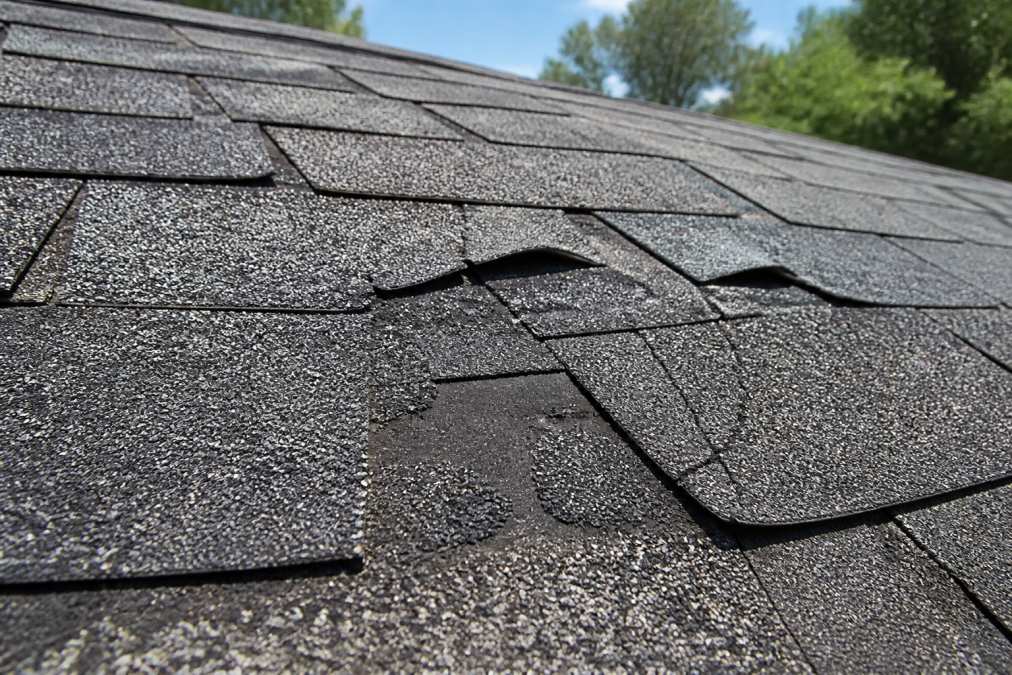
Missing or Damaged Shingles
Missing shingles are easy to spot, look for bare spots exposing the dark underlayment.
Causes of missing shingles include:
- High winds, common after storms or in exposed locations
- Poor installation, shingles not nailed properly
- Age and brittleness, old shingles crack and break easily
- Impact damage, tree branches, debris, or hail
Curling, Cracked, or Blistered Shingles
Curling shingles curl upward at the edges when old or when moisture gets trapped underneath, allowing water to run underneath instead of off the roof.
Granule Loss and Shingle Tabs
Asphalt shingles have tiny rock granules embedded in the surface. These granules protect the asphalt from UV rays and weather. They also give shingles traction and color.
Signs of excessive granule loss:
- Bald spots on shingles where you see bare asphalt
- Shingle tabs (the lower edge of each shingle) that look thin or worn
- Granules collecting in gutters, more than a small handful suggests problems
- Discolored patches where granules have worn away
Gutters, Downspouts, and Water Damage Signs
Gutters and downspouts channel water away from the roof and foundation. When they fail, water backs up and soaks into the roof structure.
Checking Gutters and Downspouts for Granules
Gutters collect debris and granules from shingles. A little is normal; a lot signals roof problems.
- Excessive granules, more than a handful in any section
- Shingle pieces, torn fragments or chunks
- Moss or algae growth, means moisture is trapped and stagnant
- Rust stains, indicate metal corrosion from water pooling
- Sagging gutters, pulled down by weight or improper fastening
- Separated seams, gaps where gutter sections join
Looking for Water Stains on Interior Ceilings
Water stains inside indicate water is already penetrating. Check attics, closets, and top-story ceilings.
Water stains appear as:
- Brown or yellow discoloration on drywall or plaster
- Dark rings that may be growing
- Soft or spongy spots in the ceiling, sign of active moisture
- Mold or mildew smell, indicates ongoing dampness
- Peeling paint on interior walls, water pushing through from outside
Flashing, Sagging, and Structural Issues
Flashing is metal that seals joints and penetrations around vents, chimneys, skylights, and roof-wall connections. Flashing failures are a common leak source.
Inspecting Flashing Around Vents and Chimneys
Flashing is easy to inspect from the ground if you use binoculars. Look at each vent and chimney carefully.
Signs of flashing problems:
- Gaps or separation where flashing meets the roof or wall
- Rust or corrosion on metal flashing, orange or dark staining
- Lifted or bent edges, flashing pulling away from the surface
- Missing caulk or sealant, gaps that should be sealed
- Visible fasteners, nails or screws that are rusted or missing
- Discoloration on roof or wall near the flashing, water staining
Identifying Sagging Rooflines
A sagging roofline is a serious structural warning indicating the roof is carrying too much weight or the supporting structure is failing.
Causes of sagging include:
- Water damage and rot in the roof deck or framing
- Snow or ice load (in northern climates) that’s too heavy
- Undersized framing, the structure wasn’t built strong enough
- Age and settling, the house shifting over decades
- Poor ventilation, moisture trapped in the attic, rotting wood
Roof Storm Damage Checklist
Storms cause specific damage: hail dents shingles, wind tears them, ice and snow add weight, and thermal shock cracks materials.
Signs of Storm Damage
Inspect your roof within 24-48 hours after a storm, as damage can be subtle at first.
Look for:
- Dents or impact marks on shingles (hail)
- Torn or lifted shingles (wind)
- Broken tree branches on the roof or in gutters
- Debris scattered across the roof or yard
- Exposed nails where shingles have lifted
- Granule loss concentrated in one area (hail impact zone)
- Flashing separation (wind or settling)
Hail, Wind, and Thermal Shock Indicators
Hail damage shows as small dents on shingles that compromise the granule layer, allowing water penetration.
How to Inspect Roof With Drone Technology
Drones reach areas ground inspection can’t, and thermal imaging adds another layer of insight.
Advantages of Drone Inspection
Drones get close-up views of the entire roof surface without climbing, hovering near flashing, vents, and chimneys to capture high-resolution images.
Benefits include:
- Safety, no climbing required
- Complete coverage, every section of the roof, including valleys and ridges
- High-resolution images, details visible that aren’t clear from the ground
- Hard-to-reach areas, flashing, vents, skylights, and roof penetrations
- Thermal imaging, reveals moisture and insulation problems
- Video documentation, shows the roof in motion, revealing water flow patterns
What Drones Reveal That Ground Inspection Cannot
Drones see the whole roof at once, catching damage ground inspection misses. Thermal imaging shows temperature differences indicating moisture, missing insulation, or air leaks.
Drones reveal:
- Moisture patterns, wet spots that aren’t visible to the eye
- Roof penetrations, all vents, pipes, and skylights in one pass
- Flashing condition, close-up detail of every joint and seal
- Shingle alignment issues, misaligned or improperly installed shingles
- Hidden damage, damage under leaves or debris
- Roof deck condition, soft spots or deterioration visible from above
|
Inspection Method |
Coverage |
Detail |
Safety |
Cost |
|---|---|---|---|---|
|
Ground inspection |
Partial |
Limited |
Safe |
Free/low |
|
Binocular inspection |
Partial to full |
Moderate |
Safe |
Minimal |
|
Drone inspection |
Complete |
High |
Safe |
Professional |
|
Thermal imaging |
Complete |
Very high |
Safe |
Professional |
When to Call a Roof Inspector
Minor issues like a few missing granules or light debris can wait, but some signs demand immediate professional assessment.
Red Flags That Require Professional Assessment
Call a professional roofer or property inspector if you find:
- Water stains inside your home (active or recent)
- Sagging roofline, any visible dip or wave
- Large areas of missing or damaged shingles, more than a few
- Flashing separation, gaps or lifted edges
- Mold or mildew in the attic or on interior surfaces
- Soft spots in the roof deck (spongy feel when walked on)
- Multiple problems in combination, granule loss plus curling plus water stains
Insurance Documentation and Professional Reports
Insurance claims for storm damage require professional documentation with detailed reports, photos, and measurements.
A professional inspection report includes:
- Detailed photos of all damage
- Measurements of affected areas
- Assessment of damage cause, storm vs. age/wear
- Repair cost estimates (when applicable)
- Roof age and remaining useful life
- Recommendations for repair or replacement
Frequently Asked Questions
What are the most common signs of roof damage from ground level?
From ground level, look for missing or cracked asphalt shingles, granule loss in gutters, sagging rooflines, and water stains on interior ceilings. Dark streaks on shingles, curled or blistered edges, and damaged flashing around vents and chimneys are also visible indicators. Storm damage such as dents or debris lodged in gutters suggests recent weather impact. These signs often indicate moisture penetration and structural concerns that warrant professional inspection.
How can I tell if my roof is damaged without getting on it?
Use binoculars to examine shingles, flashing, and gutters from the ground. Check gutters for granule accumulation, which signals shingle deterioration. Inspect interior ceilings and attic spaces for water stains or moisture. Look at the roofline from a distance to spot sagging sections. For comprehensive assessment, consider drone inspection technology, which provides aerial views of roof penetrations, underlayment damage, and areas with limited visibility that ground inspection cannot capture.
When should I call a professional roof inspector?
Call a professional if you notice multiple damage signs, especially water stains, significant granule loss, or structural sagging. After storms, hail, or high winds, professional assessment helps document damage for insurance claims. If you’re buying or selling property, a certified inspector provides detailed reports and can identify hidden damage using advanced technology like thermal imaging and drone inspection. Professionals also assess whether issues require repair or full replacement and can help with insurance documentation.
What roof damage will insurance cover?
Insurance typically covers sudden, accidental damage from storms, hail, wind, and falling debris. Damage from age, lack of maintenance, or gradual wear is usually not covered. To maximize coverage, document damage with photos and professional inspection reports immediately after storms. Insurance companies often require detailed assessments to process claims. A certified inspector’s documentation strengthens your claim by providing evidence of damage type, extent, and cause—essential for approval and reimbursement.