
Last Updated: November 14, 2026
Quick Summary
A pre-purchase inspection is a documented, system-by-system evaluation of a vehicle’s condition performed by an independent mechanic before you buy it. It typically covers the engine, transmission, brakes, suspension, frame, electrical system, and interior controls, and includes a road test, diagnostic scan, and detailed report you can use to negotiate or walk away.
- Each system is scored as pass, monitor, or fail against clear criteria.
- A pre-purchase inspection usually takes between one and three hours.
- The buyer pays for the inspection in most transactions and owns the report.
- Battery health is the most important line in a used EV report.
- Get repair estimates in writing and compare them to the asking price.
Table of Contents
- What a Pre-Purchase Inspection Covers and Why It Matters
- The Used Car Inspection Checklist: System-by-System
- How Long Does a Pre-Purchase Inspection Take?
- Pre-Purchase Inspection Cost and What Affects It
- Who Pays for a Pre-Purchase Inspection?
- EV and Hybrid Differences in Pre-Purchase Inspections
- Inspection Limitations and Choosing an Independent Inspector
- Using Inspection Findings in Negotiation and Your Purchase Decision
- Frequently Asked Questions
What a Pre-Purchase Inspection Covers and Why It Matters
The core value is simple. Sellers describe what they want you to see. An inspection documents what’s actually there.
A qualified technician checks mechanical components, runs a road test, scans for fault codes, and produces a detailed report you can use to negotiate or walk away.
If you want to see how thorough, system-by-system documentation looks in practice, our breakdown of 9 costly differences between pre-purchase and standard home inspections shows the depth a real report should reach.
The Used Car Inspection Checklist: System-by-System
A used car inspection checklist breaks the vehicle into systems and scores each one against clear pass, monitor, and fail criteria. That structure is what separates a real inspection from a quick look in a driveway.
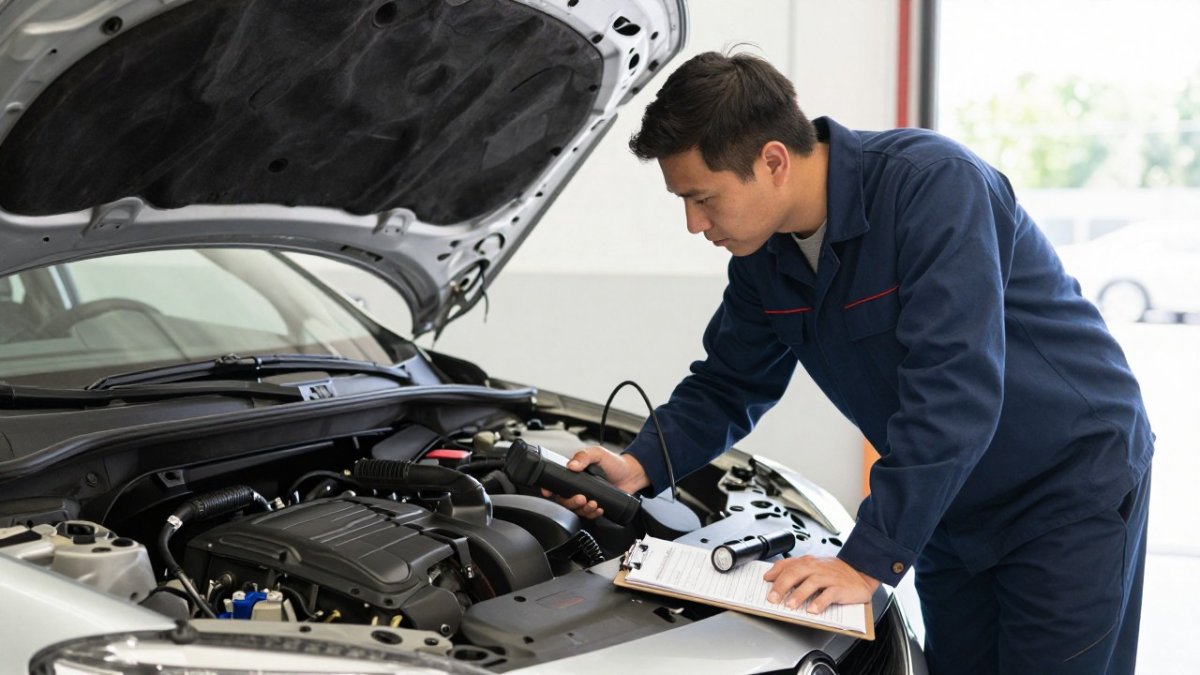
Here is the system-by-system framework we would use, grouped by what each check is trying to catch, with the criteria a buyer should expect the report to state.
Engine, Powertrain, and Diagnostic Scan
The engine check covers oil condition and level, coolant, belts, hoses, and any visible fluid leaks. A diagnostic scan pulls fault codes and warning lights from the vehicle’s computer, and the road test confirms how the powertrain behaves under load. A qualified technician also listens for unusual noise and checks for smoke.
- Pass: oil at the correct level and still translucent, no stored or pending codes, no smoke, steady idle, coolant clean and at the cold-fill line.
- Monitor: a single pending code that does not return after a drive cycle, a seeping valve cover gasket, or a belt showing minor surface cracking.
- Fail: active check-engine light, misfire codes, oil that is milky or smells of fuel, blue or white smoke, or a head gasket leak confirmed by a coolant pressure test.
Watch out: a seller who clears codes right before your inspection can hide an active fault, so ask the inspector to record readiness monitors, if they read “not ready,” the computer was recently reset and the scan is incomplete.
Transmission and Drivetrain
Transmission operation is checked on the road test and, where accessible, at the fluid and pan. The inspector looks for delayed or harsh engagement, slipping under acceleration, shudder at steady speed, and whining or clunking from the driveline.
- Pass: clean, pink-to-red automatic transmission fluid with no burnt smell, smooth upshifts and downshifts, no slip, no warning message.
- Monitor: fluid that is dark but not burnt, a slight flare between gears, or a seeping pan gasket.
- Fail: burnt-smelling fluid, metal debris on the dipstick or in the pan, slipping, harsh engagement from park to drive, or a transmission warning light.
Brakes, Tires, Steering, and Suspension
Brake pads and rotors get measured, tires get checked for tread depth and uneven wear, and the steering and suspension get tested for play, alignment issues, and worn components. Uneven tire wear often points to an alignment or suspension problem that a buyer would otherwise miss.
- Pass: pads at 6/32 inch or more, rotors above the manufacturer’s minimum thickness, tires at 6/32 inch or more with even wear, no play in tie rods or ball joints, no leaking struts.
- Monitor: pads at 3/32 to 5/32 inch, tires at 4/32 to 5/32 inch, or a light seep at a shock or strut.
- Fail: pads at 2/32 inch or less, rotors below minimum thickness or deeply scored, tires at 2/32 inch or less, cupped or feathered wear, a pulsating brake pedal, or any looseness in steering linkage.
Body, Frame, Undercarriage, and Electrical Systems
Body panels get checked for prior repair, rust, and mismatched paint. The undercarriage and frame get inspected for structural integrity and corrosion. Electrical checks cover the battery, charging system, lights, dashboard gauges, air conditioning, and interior controls, plus safety features.
- Pass: paint thickness consistent across panels, no rust perforation, frame rails straight with factory welds intact, battery and charging system within spec, every light and control working.
- Monitor: a repainted panel with no underlying damage, surface rust on the undercarriage, or a battery more than four years old that still passes a load test.
- Fail: frame damage, rust holes in structural members, mismatched paint over body filler, a battery that fails a load test, or any safety system warning light that will not clear.
Fluids, Leaks, Belts, Hoses, and Cooling System
Fluids are checked for level, color, and smell, and the cooling system is pressure-tested where the shop allows it. Belts and hoses are inspected for cracking, glazing, and softness.
- Pass: all fluids at the correct level and color, no active leaks, no coolant smell, belts and hoses pliable with no cracking.
- Monitor: a slow seep at a hose clamp, a belt with minor surface cracks, or coolant that is due for a change.
- Fail: an active coolant, oil, or transmission leak, a swollen or soft hose, a glazed belt, or a cooling system that will not hold pressure.
Interior, Comfort, and Safety Features
The interior check covers seats, upholstery, HVAC output, infotainment, cameras, and driver-assist systems. The inspector confirms that air conditioning blows cold, that heated and cooled seats work, and that any advanced driver-assistance features, adaptive cruise, lane keeping, blind-spot monitoring, engage without error messages. Because these cabin features can reveal wear or faults that a brief test drive misses, a broader automotive check helps put their condition in context.
- Pass: all controls function, A/C vent temperature within spec, no warning messages, all cameras and sensors clean and operating.
- Monitor: a worn seat bolster, a slow-to-respond touchscreen, or A/C that is cool but not cold.
- Fail: A/C that blows warm, an airbag or safety-system warning light, or a driver-assist feature that faults on the test drive.
For a buyer’s version of a full system-by-system walkthrough, our home inspection checklist for buyers shows how a complete report is organized.
Each system in the checklist is scored against clear pass, monitor, and fail criteria, and here is what those ratings mean.
| Rating | Meaning | Example from the article |
|---|---|---|
| Pass | Within spec, no near-term attention needed | Pads at 6/32 inch or more |
| Monitor | Serviceable now, likely needs work within 12 months | Pads at 3/32 to 5/32 inch |
| Fail | Unsafe, out of spec, or a repair to price into the offer | Pads at 2/32 inch or less |
How Long Does a Pre-Purchase Inspection Take?
A pre-purchase inspection usually takes between one and three hours, depending on the vehicle and the scope of the service. A basic mechanical check on a newer car sits at the shorter end; a full inspection with a diagnostic scan, road test, and lift time on an older or complex vehicle runs longer.
The time also depends on the shop’s schedule and whether the seller makes the vehicle available promptly. Ask the inspector upfront how long they need and confirm the seller can release the car for that window.
Pre-Purchase Inspection Cost and What Affects It
Pre-purchase inspection cost varies with the vehicle type, the depth of the service, and the region. Pricing depends on scope, so request a written quote before booking.
Ask for a written scope before you book so you know what’s included, and confirm whether the price covers the points that matter most to you. For current pricing, check with the inspection provider directly.
Who Pays for a Pre-Purchase Inspection?
The buyer pays for a pre-purchase inspection in most transactions. The inspection protects the buyer’s money, so the buyer commissions it and owns the report.
There are exceptions. A seller may order an inspection to address known issues before listing, and some dealers provide one as part of a sale. When the seller pays, treat the report with more caution: the person who paid for it had influence over its scope. An independent inspection you commission yourself is the one you can trust without reservation.
EV and Hybrid Differences in Pre-Purchase Inspections
The inspector reviews the high-voltage battery’s state of health, the charging system, and any diagnostic codes specific to the electric drivetrain, alongside the usual brakes, tires, and suspension.
Regenerative braking changes how brake wear shows up, so pad condition needs a closer look. Battery degradation is the single biggest cost risk on a used EV, which makes a battery health check the most important line in the report.
Inspection Limitations and Choosing an Independent Inspector
No inspection catches everything, and knowing the limits protects you as much as the report does. An inspector assesses visible and accessible components; items hidden inside a sealed transmission, behind body panels, or requiring disassembly may not be checked. A pre-purchase inspection is not a warranty and does not guarantee the vehicle will stay problem-free.
Choosing an independent inspector matters more than most buyers realize. Look for credentials, ask what the report includes, and confirm the inspector has no relationship with the seller. Our sample reports and safety information sheets show what a professional report should contain, and our about page explains the credentials to look for before you hire anyone.
Using Inspection Findings in Negotiation and Your Purchase Decision
Inspection findings give you use, but only if you use them correctly. A detailed report with a repair estimate lets you ask the seller to fix specific items, reduce the price by the estimated repair cost, or walk away.
Get repair estimates in writing and compare them to the asking price before you decide. If you’re preparing for the inspection stage, our guide on how to prepare for a home inspection covers the same preparation logic that applies to any pre-purchase evaluation.
A pre-purchase inspection only pays off when the report is thorough, independent, and explained in plain language.
Frequently Asked Questions
What should be included in a pre-purchase inspection?
A thorough pre-purchase inspection includes engine and powertrain checks, transmission operation, brakes, tires, steering and suspension, body and frame condition, undercarriage, electrical systems, and a diagnostic scan for fault codes. It also covers a road test and a review of fluid leaks, belts, hoses, and warning lights. Ask for a detailed report that lists each system with pass, monitor, or fail notes so you know exactly what you are buying.
How much does a pre-purchase inspection usually cost?
Pre-purchase inspection cost varies by vehicle type, location, and how deep the inspection goes. A basic mechanical inspection typically costs less than a full diagnostic with a road test and scan. Specialty checks for EVs, hybrids, or luxury vehicles can run higher. Pricing depends on the service scope and vehicle, so request a quote from your inspector and confirm what is included before booking.
How long does a pre-purchase inspection take?
Most pre-purchase inspections take one to three hours depending on the vehicle and the depth of the check. A basic mechanical inspection may finish in about an hour, while a full inspection with a diagnostic scan, road test, and undercarriage review takes longer. EVs and hybrids can take extra time for battery health checks. Schedule enough time so the inspector is not rushed.
Who pays for a pre-purchase inspection?
The buyer usually pays for a pre-purchase inspection because it protects the buyer’s interests. Some sellers split the cost or offer to pay to speed up a sale, but that can create a conflict of interest. To keep the inspection independent, pay for it yourself and choose an inspector who works for you, not the seller. This helps ensure the report reflects the vehicle’s real condition.
Can a pre-purchase inspection find hidden problems?
A pre-purchase inspection can uncover many hidden problems, including fault codes, fluid leaks, worn brake pads, frame damage, and rust. It cannot see inside a sealed transmission or predict every future failure. That is why a detailed report with pass, monitor, and fail criteria matters: it tells you what is confirmed, what needs watching, and what to negotiate before you buy.
