
Quick Summary
A commercial property condition assessment is a systematic review of a building’s physical condition, major systems, and the repairs it is likely to need over the next several years. Buyers, lenders, and owners order it to understand what they are acquiring, and the result is a written report that is usually prepared to ASTM E2018.
- A PCA covers roofing, structure, mechanical and electrical systems, plumbing, fire protection, site, and accessibility.
- Assessors generally cannot see inside walls, under finished floors, or below grade, and reports say so.
- ASTM E2018-24 is the current edition, but many reports still follow the 2015 version.
- Probable cost opinions are planning figures, not contractor bids; get two or three bids on the largest items.
- Zenith Property Inspections offers same-day reporting for many inspections once the site visit is complete.
Table of Contents
- What a Commercial Property Condition Assessment Covers
- Why Lenders and Buyers Order a PCA
- ASTM E2018-15 Standard: What It Requires
- Commercial Property Inspection Checklist: Systems and Components
- PCA Report Cost: What Drives the Price
- Commercial Building Due Diligence: From Engagement to Report
- Booking Your Commercial Property Assessment with Zenith
- Frequently Asked Questions
What a Commercial Property Condition Assessment Covers
A commercial property condition assessment, often called a PCA, is a systematic review of a building’s physical condition, its major systems, and the repairs it is likely to need over the next several years.
A PCA is not a code-compliance inspection or an environmental study. It focuses on the physical plant: roofing, structural elements, mechanical and electrical systems, plumbing, fire protection, site improvements, and accessibility features.
Scope has limits, and a good report says so. Assessors generally cannot see inside walls, under finished floors, or below grade.
Why Lenders and Buyers Order a PCA
Lenders order PCAs to size reserves and confirm that a building can carry its debt. Buyers order them to avoid paying for deferred maintenance they did not budget for.
For a buyer, the report turns vague worry into specific line items. A failing roof membrane or aging rooftop HVAC units can represent a six-figure capital need, and a PCA makes that visible during due diligence rather than after closing.
Sellers and owners order PCAs too, often before listing. Knowing the issues in advance lets an owner price repairs into the deal or disclose them on their own terms.
ASTM E2018-15 Standard: What It Requires
ASTM E2018 is the standard practice most commonly used for baseline property condition assessments of commercial real estate.
The standard describes the minimum elements of a baseline assessment, including the research phase, the site reconnaissance, the interviews, and the content of the written report. You can see what a finished deliverable looks like in this sample inspection report.
Practically, a compliant report should identify each building system reviewed, describe observed conditions, flag physical deficiencies, and provide opinions of probable cost and remaining useful life where applicable.
Commercial Property Inspection Checklist: Systems and Components
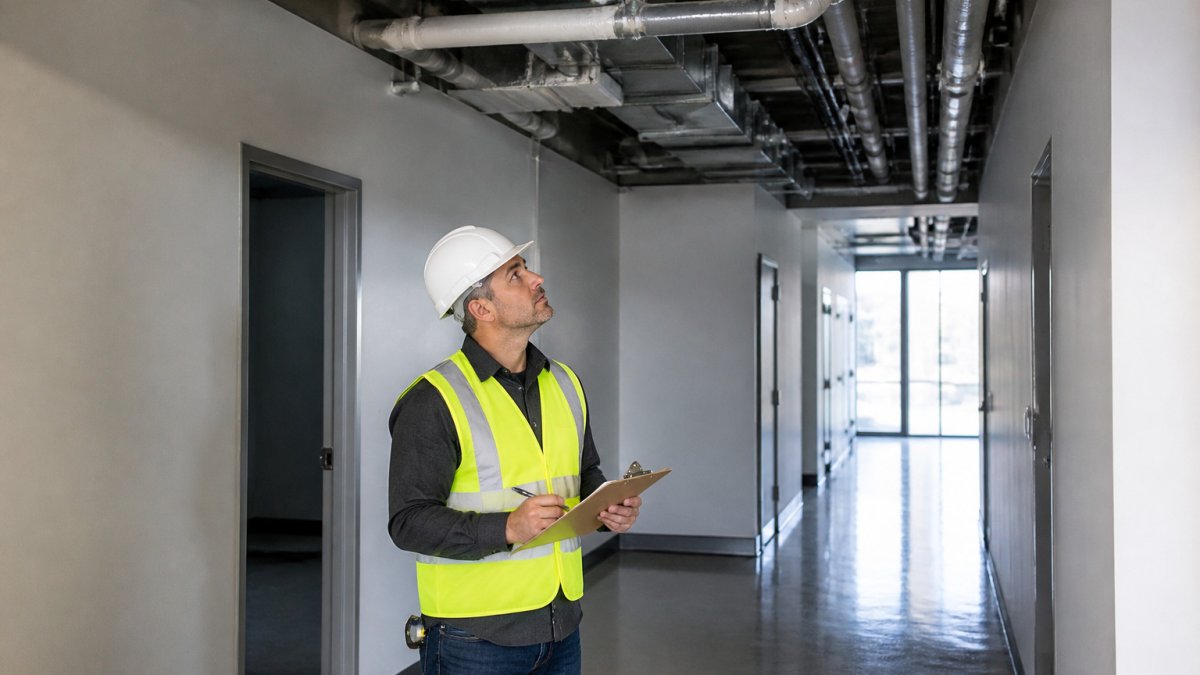
A commercial walkthrough covers far more than the interior finishes a homebuyer usually sees. The assessor works through a checklist of building components and records the condition of each one. For a comparison with how a general home inspection scope differs, see residential home inspection checklist.
Envelope and structure
- Roof coverings, flashing, drainage, and penetrations
- Exterior walls, cladding, and sealants
- Foundations, structural framing, and visible settlement or cracking
- Windows and exterior doors
Mechanical, electrical, and plumbing
- Heating, ventilation, and air-conditioning equipment and its age
- Main electrical service, panels, and distribution
- Domestic water supply, drainage, and water heating
- Elevators and vertical transport, where present
Life safety and site
- Fire alarm, sprinkler, and suppression systems
- Parking areas, paving, walkways, and site drainage
- Accessibility features measured against applicable requirements
- Common areas and building amenities
Zenith Property Inspections uses drone and infrared thermal imaging.
PCA Report Cost: What Drives the Price
PCA pricing is one of the first questions a buyer, lender, or owner asks, and it is also one of the hardest to answer generically.
The variables that move a PCA quote most are consistent across providers:
- Building count and gross square footage. Each structure needs its own walkthrough, system inventory, and report section. A portfolio of five buildings is not five times a single building, but it is meaningfully more than one.
- Property type and system complexity. Multifamily, office, retail, industrial, and hospitality properties carry different system inventories. Elevators, central plants, cooling towers, fire pumps, generators, and commercial kitchens each add specialized review time.
- Roof and envelope access. Low-slope roofs, parapets, and concealed conditions may require drone or infrared thermal imaging, which adds field time and analysis.
- Document availability. A property with as-built drawings, prior PCA reports, maintenance logs, and capital expenditure history takes less research time than one with missing records. When documents are absent, the assessor must rely more heavily on field observation and qualified language in the report.
- Scope additions. ASTM E2018 defines a baseline assessment. Seismic evaluations, ADA transition plans, environmental screening, mechanical engineering review, and reserve studies are typically separate scopes with separate fees.
- Turnaround and scheduling. Rush delivery, weekend site visits, and multi-building scheduling all affect price. Standard turnaround is commonly several business days to two weeks after the site visit; expedited delivery commands a premium.
- Travel and geography. Providers price travel into the fee, so a property outside a firm’s normal service area costs more.
A useful way to read a PCA quote is to separate the assessment fee from the probable cost opinions inside the report. The fee is what you pay the assessor. The probable costs are the assessor’s estimates of what repairs will cost, they are planning figures, not bids, and they are not included in the fee.
When you request quotes, ask each provider to state the ASTM E2018 edition they will follow, the systems included, the systems excluded, the number of site visits, the report turnaround, and whether drone or infrared imaging is included or billed separately. Quotes that look cheap often exclude the very systems driving your risk.
For budgeting purposes, treat the PCA fee as a due diligence line item separate from your repair reserve. Lenders frequently require the report as a condition of financing, and the reserve they size from it is a separate number that affects loan proceeds and post-closing cash needs. Budgeting for both, the assessment and the reserve, is the realistic way to plan a commercial transaction. Beyond the physical structure, protecting the asset often requires a commercial security assessment to identify potential vulnerabilities that could impact long-term operational stability.
The main variables that move a PCA quote are summarised below.
| Price driver | What it affects | Note |
|---|---|---|
| Building count and square footage | Each structure needs its own walkthrough and report section | Five buildings cost more than one, but not five times as much |
| Property type and system complexity | Specialised review time | Elevators, chillers, fire pumps and generators add review time |
| Roof and envelope access | Field time and analysis | Drone or infrared imaging adds time and cost |
| Document availability | Research time | Missing records shift weight onto field observation |
| Scope additions | Separate fees | Seismic, ADA, environmental and reserve studies are priced separately |
| Turnaround and scheduling | Price | Rush delivery and weekend visits carry a premium |
| Travel and geography | Price | Properties outside a firm’s service area cost more |
Commercial Building Due Diligence: From Engagement to Report
A PCA sits inside a larger due diligence process, and the timeline is what most buyers underestimate. For a guide to the same diligence needs from an investor’s perspective, read property inspection for investors.
1. Engagement and scope (days 1-3). Confirm the property address, the ASTM E2018 edition to be followed, the intended user of the report, and any lender-specific requirements.
**2.
3. Site access and scheduling (days 3-10). The assessor coordinates with the owner, property manager, or tenant to arrange access to roofs, mechanical rooms, electrical rooms, and tenant spaces.
**4.
**5.
6. Draft review and final delivery. Many providers issue a draft for factual accuracy review before finalizing.
How to interpret the report and act on it
Receiving the report is the midpoint, not the end. The findings feed directly into transaction decisions, and the way you read them matters as much as the assessment itself.
- Separate immediate repairs from long-term replacement. Immediate repairs are items that are broken, unsafe, or failing now. Short-term items are likely within one to two years. Long-term items are replacement planning. Each category carries a different negotiating weight.
- Prioritize by cost and consequence. A failing roof over occupied space and a worn parking lot surface are both deficiencies, but only one threatens the building envelope and tenant relationships. Rank items by cost, safety, and operational impact.
- Request bids on the largest items. Probable cost opinions are planning figures, not contractor quotes. For the largest line items, obtain two or three contractor bids during the due diligence period to convert estimates into real numbers.
- Use the findings in negotiation. Buyers commonly seek a price reduction, a seller credit, or an escrow holdback sized to the immediate and short-term repair total. Sellers may prefer to complete repairs before closing. The report gives both sides a shared factual basis.
- Feed the numbers into capital planning. The long-term replacement schedule becomes the basis for a capital reserve plan, which lenders use to size reserves and owners use to budget replacements over the hold period.
The report is a negotiating and planning document, not a verdict. Its value comes from how you translate deficiencies into price adjustments, repair scopes, and reserve contributions before closing.
Selecting a provider before you start
Because the timeline and the report quality depend heavily on the assessor, provider selection deserves its own checklist. Ask each candidate for:
- Qualifications and relevant experience with your property type
- The ASTM E2018 edition they follow and a sample report
- Proof of errors and omissions insurance and general liability coverage
- A written scope listing systems included and excluded
- Site visit logistics, report turnaround, and who reviews the draft
- Whether drone, infrared, or specialty engineering reviews are included or billed separately
Comparing providers on scope and sample report quality, not fee alone, is the most reliable way to avoid a report that looks complete but leaves the systems that matter unexamined.
Booking Your Commercial Property Assessment with Zenith
Zenith Property Inspections is led by a National Housing Code Certified Master Inspector, offers Saturday and Sunday appointments at no extra charge, and delivers detailed reports on the same day of the inspection. Before you book, you can compare inspectors suited to investment properties.
Frequently Asked Questions
What is included in a commercial property condition assessment?
A commercial property condition assessment, or PCA, is a visual evaluation of a building’s physical condition. It typically covers structural systems, the roof, building envelope, mechanical, electrical and plumbing systems, fire protection, site improvements and accessibility. The inspector reviews property records and may interview the owner or occupants. The output is a report listing physical deficiencies, immediate repair needs, short-term needs and estimated costs to remedy them, which helps buyers and lenders understand the property before closing.
How does ASTM E2018-15 define a property condition assessment?
ASTM E2018-15 is the standard guide for baseline property condition assessments published by ASTM International. It defines the scope of a PCA as a visual observation and documentation of readily observable physical conditions, supplemented by document review and interviews. The standard is voluntary rather than a federal regulation, but lenders and buyers commonly require reports that follow it. Following the standard helps ensure the assessment is consistent and comparable across providers.
How much does a PCA report cost?
PCA report pricing depends on property size, number of buildings, property type, complexity of systems, report turnaround and location. Because these factors vary widely, Zenith Property Inspections does not publish a fixed price range here. For current pricing and a quote tailored to your property, contact Zenith Property Inspections directly through its website. Requesting a quote with the property address, square footage and intended use makes the estimate more accurate.
What is the difference between a home inspection and a PCA?
A home inspection is generally designed for residential property and focuses on the condition of a home for a buyer, while a PCA is built for commercial and multifamily properties and follows the ASTM E2018 framework. A PCA typically includes a reserve-oriented view of replacement timing and cost estimates for capital planning, which lenders use in underwriting. Because the scope and report format differ, a home inspector is usually not a substitute for a PCA on commercial assets.
Who is qualified to perform a commercial property condition assessment?
Zenith Property Inspections is led by a National Housing Code Certified Master Inspector and follows InterNACHI, ASHI and CREIA standards of practice.
How long does a commercial property condition assessment take?
Timelines depend on property size, number of buildings and access to records. A single small building may be completed in a day or two on site, while larger or multifamily properties take longer. Report delivery often follows the site visit by several business days after document review. Planning ahead for lender and closing deadlines and providing property records early helps keep the schedule on track.
