
Last Updated: November 1, 2026
Quick Summary
The most reliable way to find hidden mold is to start with a musty odor, then look for water stains, peeling paint, and warped wood. Check damp areas like bathrooms, basements, and crawl spaces, and find the moisture source first. Mold needs moisture to grow, so fixing the water is key.
- A musty, earthy smell is one of the most common signs of hidden mold.
- Stains that return after cleaning usually mean a moisture source is still active.
- Work from the outside in, checking gutters, grading, and roof leaks first.
- A moisture meter reading shows where water is, not whether mold is growing.
- Do not open a wall if you have asthma, allergies, or a compromised immune system.
Table of Contents
- Start With Your Nose: What a Musty Odor Really Means
- Look for Water Stains, Peeling Paint, and Warped Wood
- Where Mold Hides in a Home: A Room-by-Room Checklist
- Tracking Down Moisture Sources Before You Open a Wall
- How to Find Mold Behind Walls Without Causing Damage
- When Mold Testing Helps and When It Does Not
- What to Do After Finding Mold in Your Home
- Frequently Asked Questions
Start With Your Nose: What a Musty Odor Really Means
The nose is often the first tool to use when checking a home. A musty, earthy smell is one of the most common signs of hidden mold in houses (the EPA). Mold can stay hidden even after the usual hiding places are checked, and a musty odor may still point to a problem.
Here’s the thing: a smell is a clue, not proof. Plenty of ordinary things can smell musty, like an old carpet, a wet mop, or a closed-up room. So treat the odor as a reason to keep looking.
Watch out: Don’t assume a room is fine because you can’t smell anything. Mold can hide behind walls and under floors, so a clean smell test doesn’t rule it out.
To use your nose well:
- Visit each room at different times of day
- Check closets, under sinks, and near the floor
- Note where the smell is strongest
- Sniff near vents, since air moves odors around
Look for Water Stains, Peeling Paint, and Warped Wood
Visible damage is often the next sign. Using sight and smell together is a practical way to look for excess moisture and mold. That makes your eyes just as useful as your nose.
Look for these warning signs:
- Water stains: Brown, yellow, or gray rings on ceilings and walls
- Discoloration: Dark spots or fuzzy patches on drywall or grout
- Peeling paint or wallpaper: Bubbles or loose edges often mean moisture underneath
- Warped wood: Cabinet bottoms, baseboards, and floors that bow or cup
Stains that come back after cleaning are a red flag. They usually mean a moisture source is still active.
Where Mold Hides in a Home: A Room-by-Room Checklist
Mold likes damp, dark, poorly ventilated spaces. Use this checklist to guide your search:
- Bathroom: Behind the toilet, around the tub caulk, and on the exhaust fan cover
- Kitchen: Under the sink, around the dishwasher, and behind the fridge
- Basement: Along foundation walls, near floor drains, and in corners
- Attic: Roof sheathing, around vents, and near roof penetrations
- Crawl space: Floor joists, insulation, and the soil or vapor barrier
- Bedrooms and living areas: Exterior walls, window frames, and closets
Check ceilings and floors too. Carpet edges and grout lines are common spots where damp materials go unnoticed.
Mold grows in damp, dark, poorly ventilated spaces, so these are the most common places to check in each room.
|
Room |
Common hiding spots |
|---|---|
|
Bathroom |
Behind toilet, tub caulk, exhaust fan cover |
|
Kitchen |
Under sink, around dishwasher, behind fridge |
|
Basement |
Foundation walls, near floor drains, corners |
|
Attic |
Roof sheathing, around vents, roof penetrations |
|
Crawl space |
Floor joists, insulation, soil or vapor barrier |
|
Bedrooms and living areas |
Exterior walls, window frames, closets |
Tracking Down Moisture Sources Before You Open a Wall
Mold needs moisture to grow, so finding the water is as important as finding the mold. A practical approach is to work from the outside in, checking the larger water sources first and confirming suspicions with a few simple tools.
Start outside and work inward. Check these in order:
- Gutters and downspouts that empty too close to the foundation, water should discharge several feet away from the house
- Grading that slopes toward the house rather than away from it
- Roof leaks, especially around chimneys, vents, and skylights
- Window and door flashing that has failed or pulled away
- Irrigation heads or hose bibs that spray against the siding
Then check the interior water systems. Under-sink plumbing, toilet supply lines, dishwasher connections, washing machine hoses, and water heater fittings are common slow-leak points. A leak that only appears when a fixture is running can be easy to miss; run each fixture and watch the supply and drain connections.
Use the right tool for the surface. A pin-type moisture meter works well on wood framing, drywall, and subfloor. A pinless meter is better for tile, finished concrete, and surfaces you do not want to mark. A hygrometer measures relative humidity in the air and can help show whether a room or crawl space is holding too much moisture. A thermal camera can screen large areas quickly, but confirm any hot or cold spot with a meter.
Interpret readings by comparison, not by absolute number. Moisture meters report on different scales depending on the material and the meter. A practical approach is to compare a suspect area to a known-dry area of the same material in the same room. A reading that is consistently higher, and that rises after rain or after a fixture runs, is a stronger signal than a single high number.
Prioritize by pattern. A stain that returns after cleaning, a musty odor that is strongest near a particular wall, or a moisture reading that climbs after a rain event all point to an active source rather than an old, dried stain. Fix the source before cleaning or removing any mold, or the growth will return.
U.S. Environmental Protection Agency moisture control guidance
How to Find Mold Behind Walls Without Causing Damage
Sometimes the only way to confirm mold is to look behind the surface. The goal is to learn what is there without tearing out more than you need to, and to know when to stop. A practical sequence looks like this.
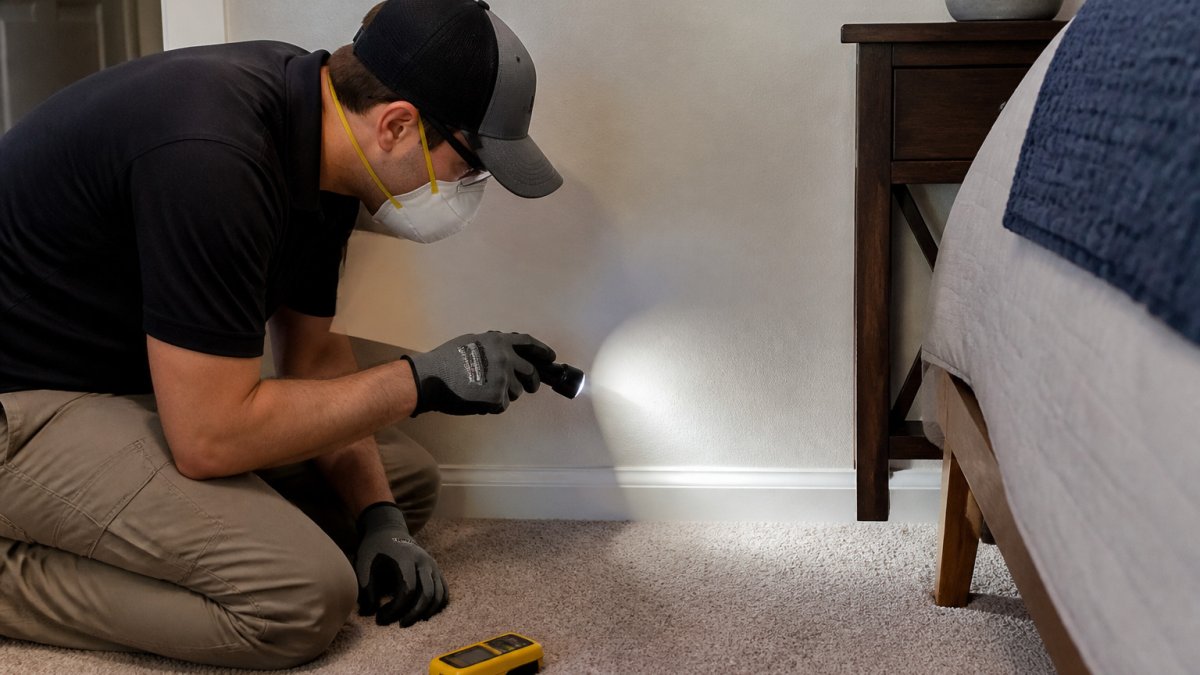
Step 1: Rule out the easy explanations first. Before you touch the wall, confirm the surface is actually dry or damp. Run your hand along the baseboard and around outlets. Look for paint bubbles, bubbling tape joints, or a baseboard that has pulled away from the drywall.
Step 2: Take a baseline with a moisture meter. A pin-type or pinless moisture meter gives you a relative reading, not a definitive mold test. The key is comparison: take readings on the suspect wall and on a known-dry interior wall in the same room.
Step 3: Use a thermal camera as a screening tool, not a verdict. An infrared camera can reveal temperature differences that suggest trapped moisture or missing insulation, but it can also flag a stud, a duct, or a shadow.
Step 4: Decide whether a borescope is warranted. A borescope or inspection camera lets you see inside a wall cavity through a hole the size of a pencil. This is reasonable when you have a confirmed moisture reading, a musty odor with no visible source, or a recent water event.
Step 5: Know when to stop and call a professional. Do not open a wall if any of the following apply:
- The area is larger than a small patch and you suspect widespread growth
- You smell a strong musty odor but cannot find the source after basic checks
- Anyone in the home has asthma, allergies, or a compromised immune system
- The wall is load-bearing, contains plumbing you cannot shut off, or is finished with materials you cannot easily replace
- You find soft, crumbly drywall, active water, or visible growth spreading across framing
A qualified mold inspector or building professional can help locate the source of moisture and growth without unnecessary demolition.
Step 6: If you do make a small opening, control the dust. Wear gloves and an N95 respirator, seal the doorway with plastic sheeting, and avoid sweeping or vacuuming dry debris with a standard vacuum. Disturbing mold can release spores into the air. Patch the opening after inspection and recheck the area for moisture after a few weeks.
U.S. Environmental Protection Agency mold guidance
When Mold Testing Helps and When It Does Not
Testing can be useful, but it isn’t always the first step. In many cases, a careful visual and smell check tells you enough to act.
Testing may help when:
- You need documentation for a sale, insurance claim, or landlord dispute
- Symptoms in the household seem linked to the home
- Mold is hidden and you can’t locate the source
Testing has limits. A sample shows what was present at one moment, not the full extent of a problem. Professional mold testing from a certified inspector can give clearer answers when the situation is unclear. Professional Mold Testing covers what to expect from that process.
What to Do After Finding Mold in Your Home
Once you find mold, act quickly. Moisture is the root problem, so fix the water source first. Small areas on non-porous surfaces may be cleaned yourself, while larger or hidden growth usually calls for a professional. Larger or hidden growth often needs a professional. Recognizing the subtle indicators of an infestation early remains the most effective way to identify hidden mold growth before it compromises your home’s structural integrity.
Here’s a simple next-step plan:
- Stop the moisture source
- Dry the area fully with fans and dehumidifiers
- Remove and bag damaged porous materials
- Clean hard surfaces with detergent and water
- Recheck for moisture and odor after a few weeks
- Call a professional if the growth is large or keeps returning
For a room-by-room walkthrough, How to Find Hidden Mold in Home: Room-by-Room Guide offers more detail. If you’re also checking the building for other problems, How to Spot Structural Home Issues: A Complete Inspection Guide covers water damage and related signs.
Frequently Asked Questions
What are the signs of hidden mold in a home?
The most common signs are a persistent musty or earthy odor, water stains or discoloration on walls and ceilings, peeling wallpaper or paint, and warped wood or flooring. Mold can also grow where you cannot see it, such as inside wall cavities, under sinks, or in crawl spaces. Mold may remain undiscovered even after typical hiding places are searched, so a strong odor or unexplained health symptoms are reasons to investigate further. Start by tracing any moisture source, since mold needs water to grow.
Where does mold commonly hide in a house?
Mold often grows in areas with moisture that is hard to see: behind walls near leaking pipes, under bathroom and kitchen sinks, in basements and crawl spaces, around roof penetrations and attic ventilation, and along exterior walls where condensation collects. Check grout lines, the underside of flooring, and the areas around HVAC ductwork and air vents. Downspouts and grading that direct water toward the foundation can also feed mold growth in the lower parts of a home.
Can a musty smell indicate hidden mold?
Yes, a persistent musty or earthy smell is one of the most frequent indicators of mold, even when no visible growth appears. Some ordinary household odors, such as damp laundry, pet smells, or stale air in a closed room, can resemble mold, so the smell should be traced to a location and paired with a moisture check. Using sight and smell to look for excess moisture and mold is a practical first step. If the odor is strongest near one wall or floor area, that is where to focus your inspection.
When should you call a professional to inspect for mold?
Consider calling a certified mold inspector when you find a large area of visible mold, when the source of moisture is unclear, when someone in the home has ongoing symptoms, or when you plan to open walls or ceilings. A certified mold inspector can help document conditions. Testing has limits: it does not replace finding and fixing the moisture source, and a negative result does not rule out every problem. Zenith Property Inspections offers mold assessments; visit the website for current scheduling and quote details.
Finding hidden mold takes patience, but a good plan makes it manageable. Zenith Property Inspections uses drone and infrared imaging to spot problem areas that are hard to see, and we deliver same-day reports with Saturday and Sunday appointments at no extra charge. Schedule your inspection with Zenith Property Inspections today.
