
Last Updated: November 22, 2026
Quick Summary
A residential drone roof inspection generally costs $150 to $400 for a visual-only assessment, according to published guides. Adding thermal imaging raises the price to roughly $300 to $700, and an insurance-ready certified report can add another $75 to $200. The final price depends mainly on roof size, complexity, slope, and the depth of the report.
- Pilots may bill by the hour, often $80 to $250, so ask whether a quote is flat-rate or hourly.
- Roof size, complexity, pitch, and reporting depth are the main factors that change the price.
- A ladder-based manual inspection often runs $300 to $600 for a typical single-family home.
- Commercial drone roof inspections are priced higher, with published ranges of $400 to $2,500.
- Confirm whether thermal imaging and an insurance-ready report are included before comparing quotes.
Table of Contents
- How Much Does a Drone Roof Inspection Cost in 2026?
- Factors That Affect Drone Roof Inspection Pricing
- Drone Roof Inspection vs. Manual Roof Inspection Cost
- Residential vs. Commercial Drone Roof Inspection Pricing
- Thermal Imaging Add-Ons and Insurance-Ready Reports
- Finding a Qualified Drone Pilot and Checking Part 107 Certification
- Finding a Drone Roof Inspection Near You and Booking Your Inspection
- Frequently Asked Questions
The final price of a drone roof inspection depends heavily on roof size, complexity, slope, and the scope of the report you need. Zenith Property Inspections, a minority-owned and operated certified home inspection business serving Northern California, uses DJI drone technology and infrared thermal imaging. Our goal in this guide is to help you understand what drives the price so you can compare quotes on equal terms.
Published price guides disagree on the numbers, so treat any single headline figure with caution. Angi lists a nationwide typical cost of $120 to $600 in 2026 (Angi drone roof inspection cost guide). SkyeBrowse puts a residential drone inspection at $150 to $400 and a commercial roof at $400 to $1,200 (SkyeBrowse drone vs. manual roof inspection price comparison). The ranges overlap and use different assumptions, so the scope of work matters more than any one number.
How Much Does a Drone Roof Inspection Cost in 2026?
A residential drone roof inspection generally falls between $150 and $400 for a visual-only assessment. Adding thermal imaging raises that to roughly $300 to $700, according to DroneTrader’s 2026 pricing guide (DroneTrader complete 2026 drone roof inspection guide). An insurance-ready certified report can add another $75 to $200.
Drone pilots may also bill by the hour, often in the range of $80 to $250 (UAV Coach in-depth drone roof inspection guide). Ask whether a quote is flat-rate or hourly so you can compare fairly.
Timing can also matter, so confirm the schedule when you request pricing. Our guide to how long a drone roof inspection takes explains what the flight and review involve, so you can plan around it.
Residential drone roof inspection price ranges
Factors That Affect Drone Roof Inspection Pricing
Most of the price variation comes from four things: roof size, roof complexity, roof pitch, and the depth of reporting. A large, multi-plane roof with dormers and valleys takes longer to fly and review than a simple gable roof, and that time shows up on the invoice.
Reporting depth matters just as much. A quick visual scan that flags obvious damage costs less than a full report with high-resolution imagery, annotated defects, and thermal data. Decide what you need before you request quotes.
Access and location can also change the price. Properties in dense neighborhoods or with restricted airspace may require extra planning. Local conditions and the pilot’s own rates vary, so expect quotes to differ even for identical roofs.
Drone Roof Inspection vs. Manual Roof Inspection Cost
A ladder-based manual inspection often runs $300 to $600 for a typical single-family home, which puts it in the same range as a drone inspection. SkyeBrowse’s comparison shows the ranges overlapping, and for commercial roofs the drone price can exceed the ladder figure it lists (SkyeBrowse drone roof inspection cost comparison). The headline numbers alone will not tell you which method is cheaper for your roof, so compare what each price actually buys.
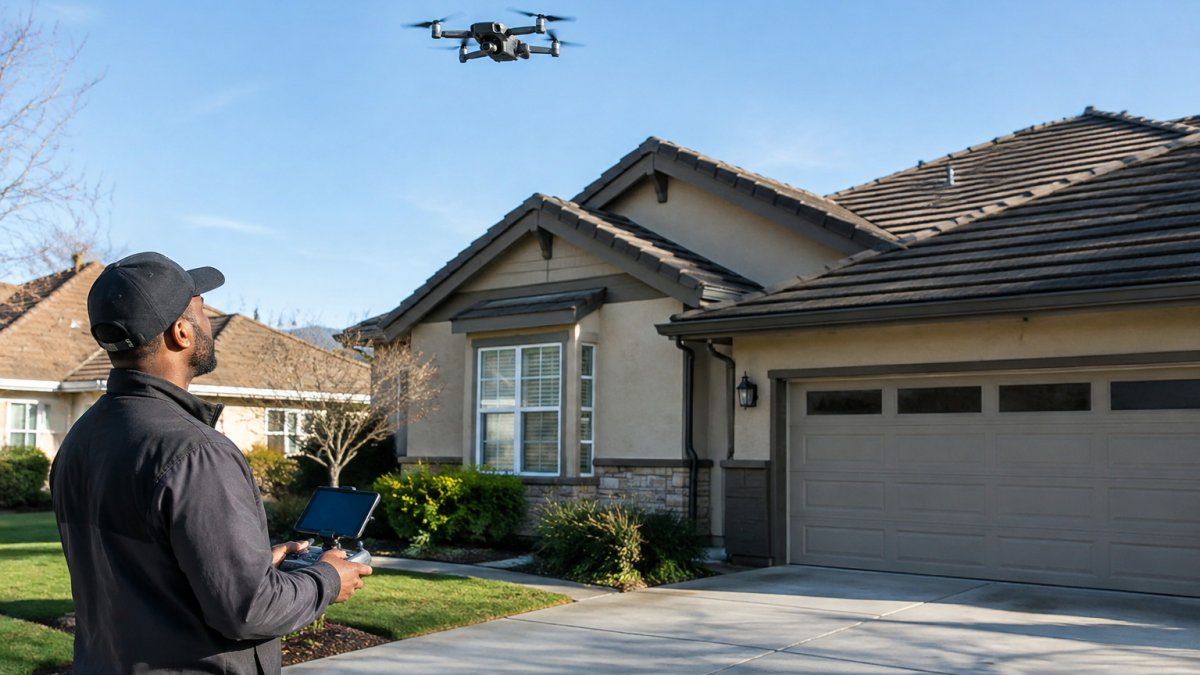
A manual inspection price typically bundles ladder setup, a walk of the roof surface, and a written report. The inspector can touch the shingles, probe soft spots, check flashing by hand, and look inside the attic from the top side. Those physical checks are hard to replicate from the air. The trade-off is access: steep pitch, fragile tile, wet surfaces, and multi-story homes can push a manual quote toward the top of the range or lead an inspector to decline the roof altogether.
A drone inspection price bundles flight time, image capture, review, and report. The pilot never touches the roof, so the cost is driven by flight planning, airspace checks, battery swaps, and the hours spent reviewing imagery. For a simple gable roof, that can land below a manual quote. For a large, cut-up roof with many planes, the flight and review time climb, and the drone quote can match or exceed the ladder price. Because flight planning and image review can recur on a schedule, recurring drone inspection costs depend on how often the roof is checked and how much work each visit requires.
A practical way to compare is to line up the deliverables side by side:
- Surface access: manual inspection reaches the roof deck; drone inspection reaches everything visible from above, including areas a ladder cannot safely reach.
- Detection method: manual inspection relies on touch and close visual review; drone inspection relies on high-resolution imagery and, if added, thermal data.
- Report format: both should produce photos and written findings, but ask whether the drone report includes annotated defects and thermal images.
- Attic and interior: a manual roof inspection often includes an attic check; a drone-only service usually does not.
- Time on site: a drone flight may take 30 to 60 minutes; a manual walk-through can take longer depending on roof size and access.
Drones can help with safety and access. An inspector does not need to climb a steep or fragile roof, and aerial imagery can capture areas that are hard to see from the ground. Where manual inspections tend to earn their cost is physical verification: touching a suspect area or checking attic-side evidence can confirm what an image only suggests.
Watch out: a low drone quote that covers only a quick visual scan is not the same product as a manual inspection with an attic check, so do not treat the two prices as interchangeable without matching the scope.
Compare the deliverables, not just the price. A drone inspection that includes imagery and thermal data may cost more than a cheaper visual check, and a manual inspection that includes attic access may cost more than a drone-only flight. For a deeper look at whether the extra cost is justified, see our guide on whether drone roof inspection is worth the cost in 2026. Our broader overview of the benefits of drone home inspections covers what else the technology adds beyond the roof.
The two methods overlap in price, so compare what each quote actually includes:
| Item | Manual inspection | Drone inspection |
|---|---|---|
| Typical single-family cost | $300 to $600 | Overlaps manual range |
| Surface access | Roof deck reached by touch | Everything visible from above |
| Detection method | Touch and close visual review | High-resolution imagery, thermal if added |
| Attic check | Often included | Usually not included |
| Time on site | Varies with roof size and access | Often 30 to 60 minutes |
| Main cost driver | Access and roof condition | Flight planning and review time |
Residential vs. Commercial Drone Roof Inspection Pricing
Residential and commercial work are priced very differently. SkyeBrowse lists residential drone inspections at $150 to $400 and commercial roofs at $400 to $1,200 (SkyeBrowse residential and commercial inspection pricing). Commercial roofs are larger, often have more penetrations and mechanical equipment, and usually require more detailed documentation.
RotorRate’s 2026 rate guide places commercial inspections higher still, between $600 and $2,500 (RotorRate 2026 drone services rate guide). These figures come from different sources with different assumptions, so use them as a rough guide rather than a fixed benchmark.
Thermal Imaging Add-Ons and Insurance-Ready Reports
Thermal imaging detects temperature differences that can point to moisture, insulation gaps, or hidden leaks. Zenith Property Inspections uses infrared thermal imaging as part of its inspections, which helps identify potential problem areas that have limited visibility. Confirm whether thermal imaging is included in any quote you receive.
How the add-on works matters when you compare quotes. A thermal camera records surface temperature across the roof, and the pilot captures matched visual and thermal images of the same area. Wet insulation, trapped moisture, and missing insulation usually show up as temperature anomalies against the surrounding field. The pilot then reviews the images and flags areas that warrant a closer look. Thermal imaging is a screening tool, not a diagnosis: it can point to a suspect area, but confirming the cause usually requires a physical inspection or a moisture meter reading.
Ask directly whether the number you were given includes thermal capture and thermal images in the report.
Ask the provider what their report contains before you book, and confirm the turnaround time, since claim deadlines can be tight.
Ask the provider to explain what each flagged area means.
If you need documentation for an insurance claim, ask whether the report is insurance-ready.
Finding a Qualified Drone Pilot and Checking Part 107 Certification
Before you hire anyone, confirm the pilot’s credentials and ask for proof of liability insurance, since a property incident during a flight is a real risk.
Credentials for the inspector matter too. Zenith Property Inspections is led by a National Housing Code Certified Master Inspector and follows InterNACHI, ASHI, and CREIA standards of practice. Look for similar, verifiable credentials when comparing providers, and ask how the report is delivered and how quickly.
Finding a Drone Roof Inspection Near You and Booking Your Inspection
Start by searching for providers that serve your area, then request written quotes that list the scope, deliverables, and any add-ons. Compare each quote against the same checklist: flight time, report format, thermal imaging, and turnaround.
If you are in Northern California and want a clear, itemized quote, you can schedule your inspection with Zenith Property Inspections or learn more about thermal imaging options. Saturday and Sunday appointments are available at no extra charge, which can help busy buyers and sellers keep a transaction on track.
Zenith Property Inspections combines drone and thermal technology with certified, plain-language reporting. For current prices, request a quote through the company’s website.
Frequently Asked Questions
How much does a drone roof inspection cost?
Drone roof inspection pricing depends on roof size, complexity and slope, and on whether you add thermal imaging or an insurance-ready certified report. For current prices, request a quote through Zenith Property Inspections’ website, and compare what each quote includes before deciding.
Is a drone roof inspection worth the extra cost over a manual inspection?
A drone can view roof surfaces without a ladder, which helps reach steep or high areas safely and can document conditions with high-resolution imagery. A ladder inspection and a drone inspection can overlap in cost, so the drone is not always the cheaper option. Drones can be useful on steep, high or hard-to-reach roofs and when visual documentation matters for a sale or insurance claim.
Do drone roof inspectors need a Part 107 license?
In the United States, pilots flying drones for commercial purposes, such as property inspections billed to clients, generally need an FAA Part 107 remote pilot certificate. Hobbyist flights are governed by different rules. When hiring, ask the pilot for their certificate number and confirm it, and ask whether they carry professional liability insurance.
What should a drone roof inspection report include?
A useful report typically includes dated high-resolution photos, annotated problem areas such as missing shingles, damaged flashing or gutter issues, and, when ordered, thermal images highlighting moisture or heat anomalies. It should also note roof pitch and overall condition in plain language. Zenith Property Inspections delivers detailed reports on the same day, and current pricing is available through the company’s website or a direct quote.
